
Invention of the Rappel Rack
Invention of the Rappel Rack
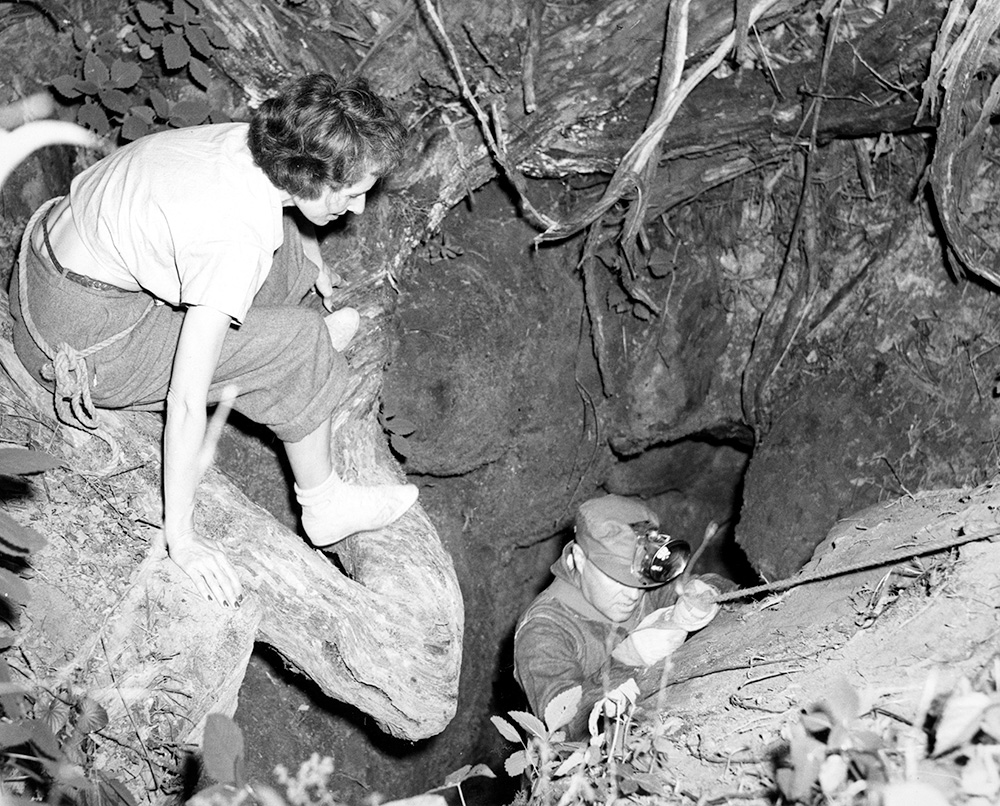
Climbing hand over hand
Modern techniques and equipment for exploring vertical caves generally involve going up and down fixed ropes. But the evolutionary path to these contemporary methods took a few twists and turns.
In the early days of vertical caving, participants might negotiate a climb by simply using the rope in a hand-over-hand modality…somewhat analogous to the manner in which a student is taught to climb a rope in gym class at school.
[Photograph from the NSS Photo Archives. Photographer Unknown.]
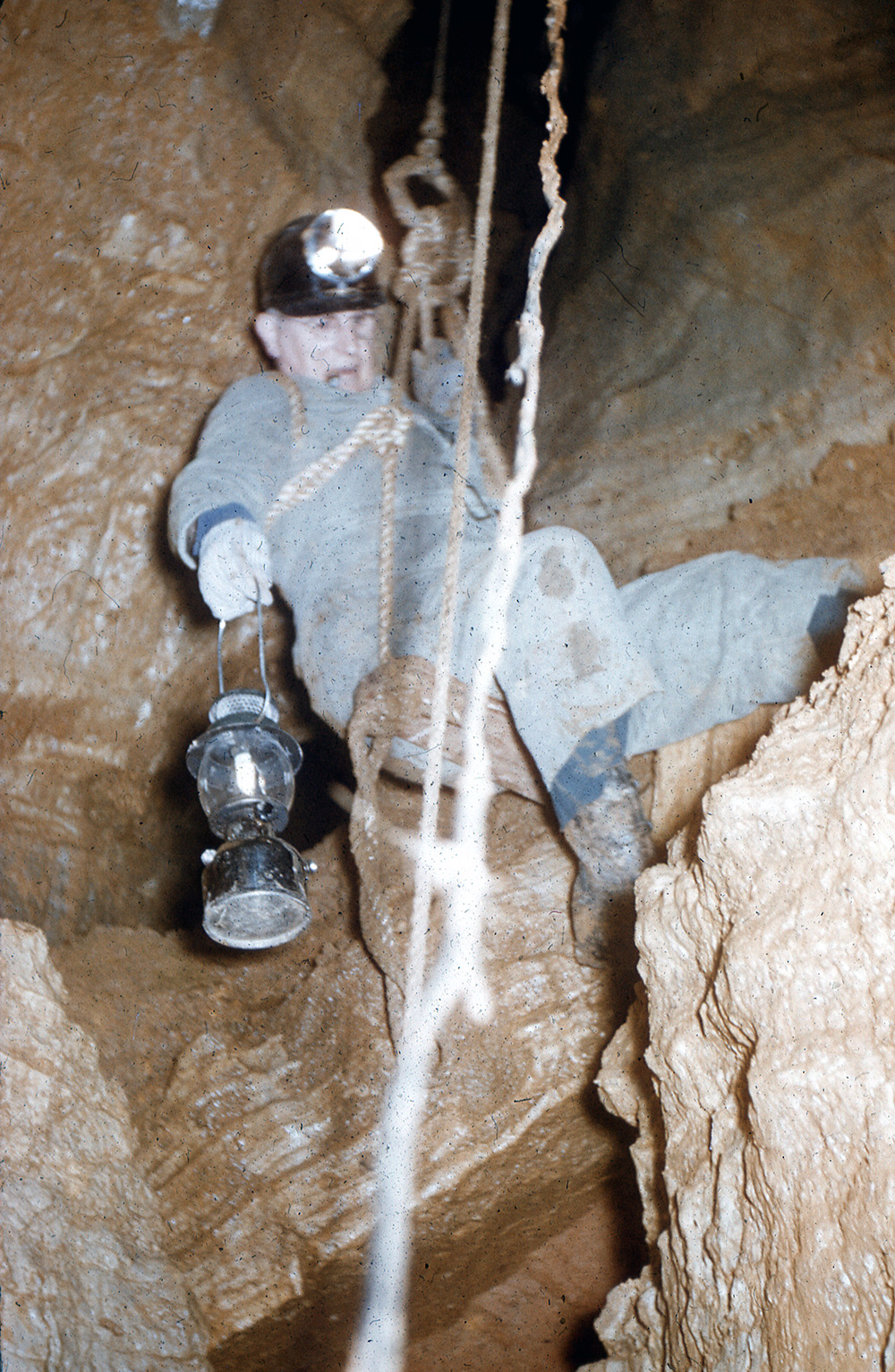
Burton being lowered in a wooden seat
For drops too lengthy for relying on hand strength alone, an explorer might be lowered and raised by teammates stationed above. In this picture, early NSS member Burton Faust sits in a wooden seat attended to by trusted rope-handlers on the surface.
[Photograph from the NSS Photo Archives. Photographer Unknown.]
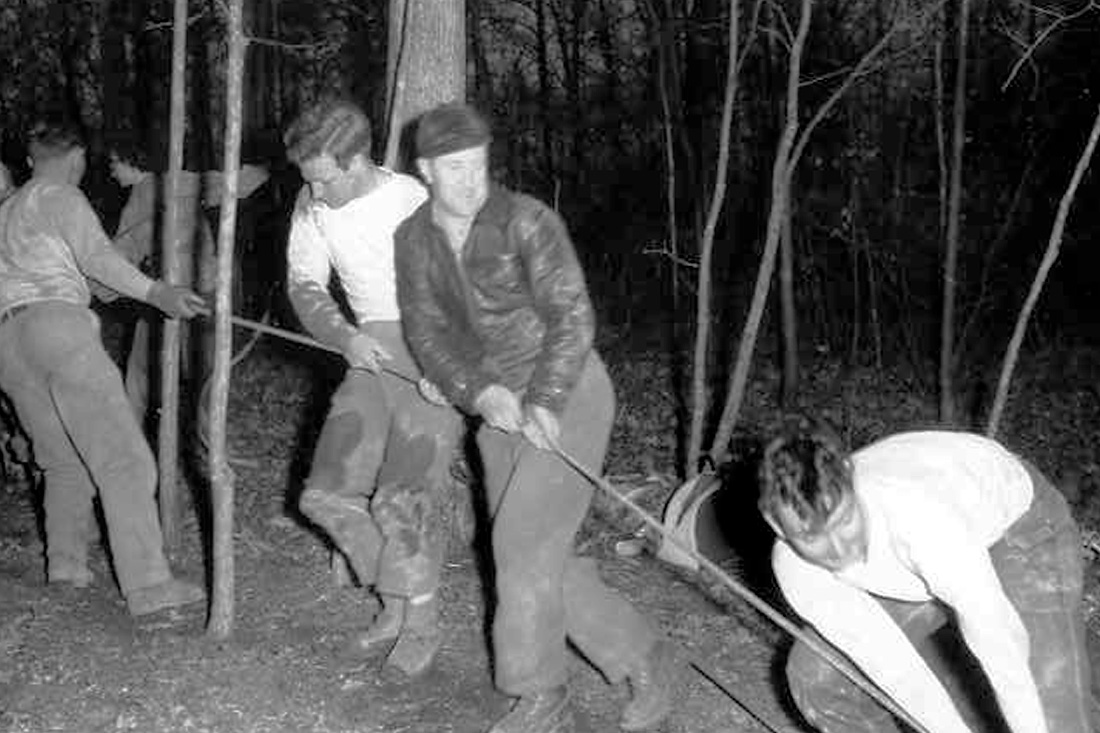
Direct haul by hand
As seen in this image, it frequently required several people to manhandle the weight of a single explorer hanging from the rope.
[Photograph by Standiford R. (“Tank”) Gorin.]
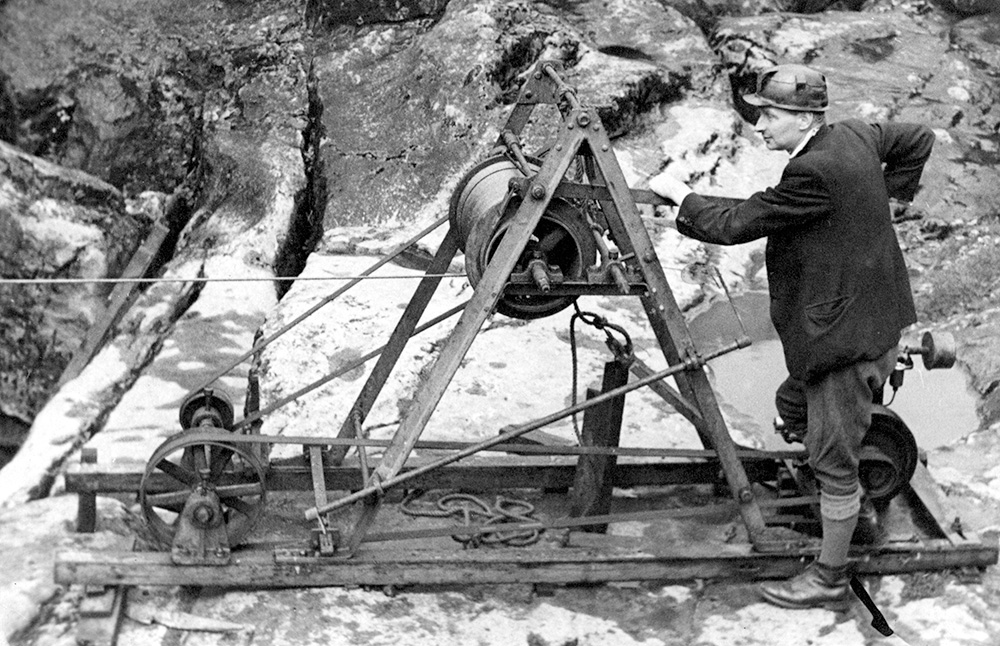
Gas powered winch
And, for those not put off by the noise and the exhaust, a gasoline-powered winch could supply the horsepower required. But, like the manual arrangements described earlier, the safety of the suspended explorer was highly dependent on the skill and strength of the rope attendants.
[Photograph from the NSS Photo Archives. Photographer Unknown.]
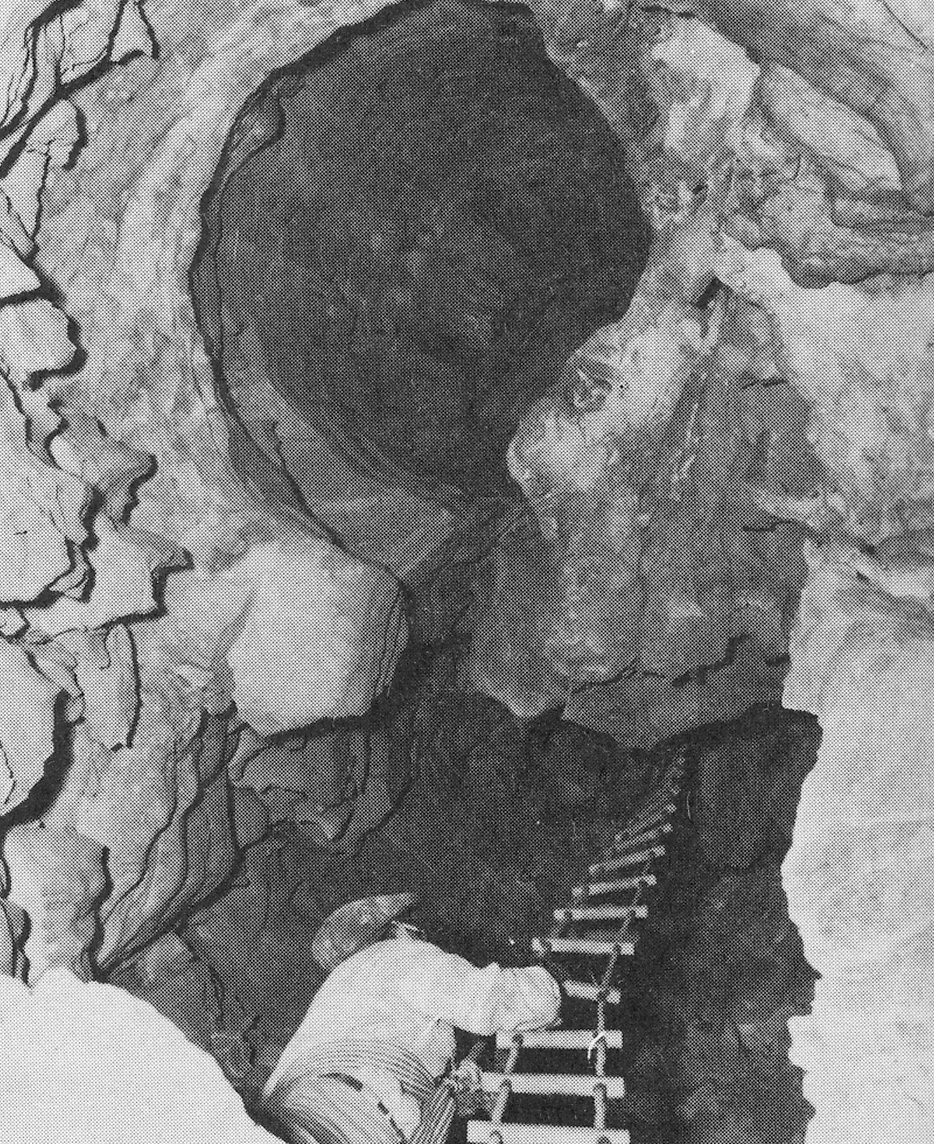
Rope ladder with wood rungs
One alternative that permitted the cave explorer to retain some autonomy involved climbing up and down flexible ladders. In this instance, the ladder’s rungs are made from slats of wood.
[Photograph by Dick Bruce.]
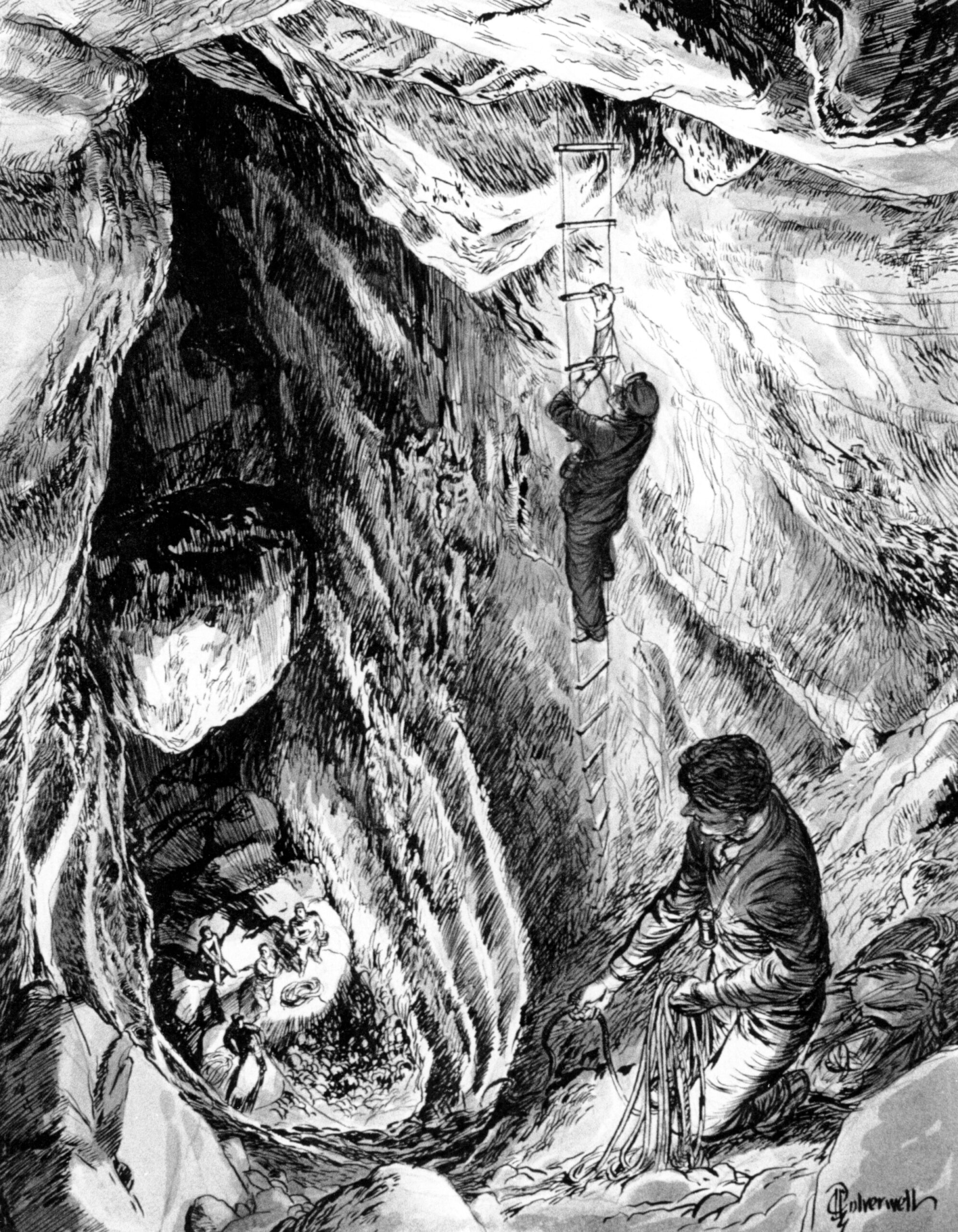
Rope ladder climb
In other cases, metallic rungs might be substituted.
[Drawing by Tom Culverwell.] [From the NSS Museum collection.]
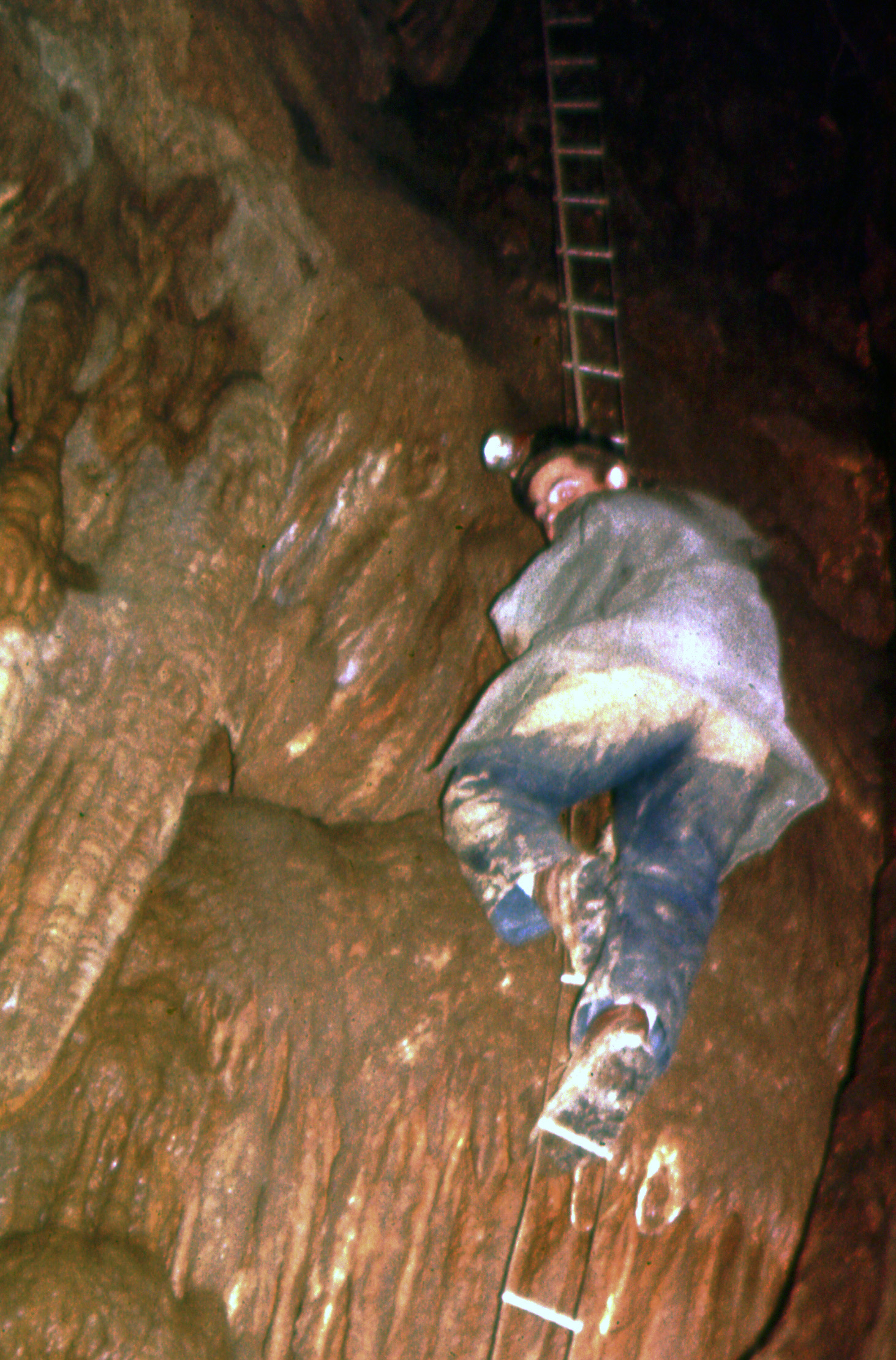
Cable ladder climb with belay
One complication with flexible ladders is the desirability of using an independent safety rope fastened to the climber. That way, if the ladder failed, the caver would still be protected by the rope. Of course, such rigging required a ladder, a safety rope, and another companion to help carry all of this gear…and to belay the safety rope while the lead climber is on the ladder.
[Photograph from the Nancy G. Rogers Collection in the NSS Photo Archives. Photographer Unknown.]
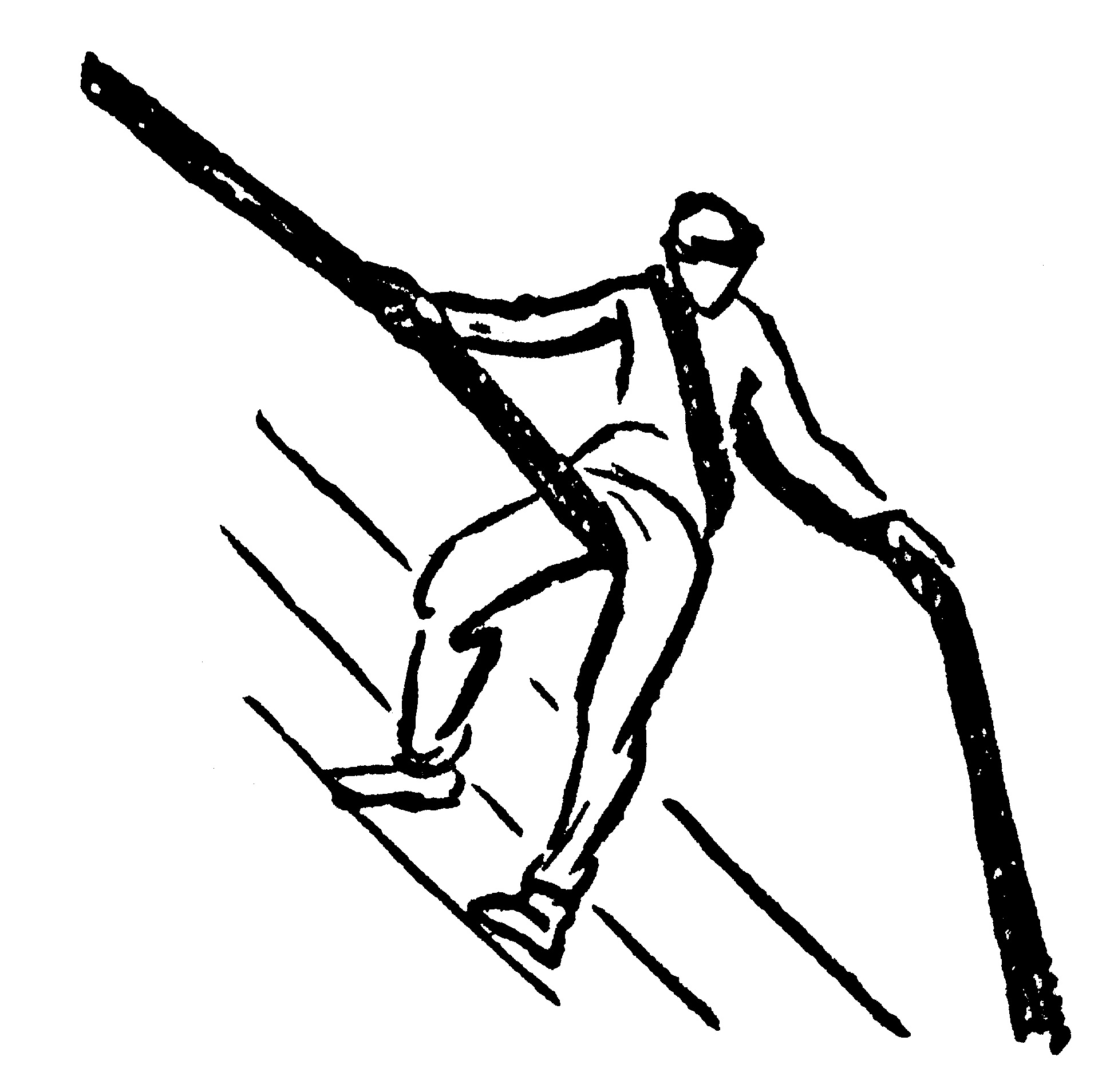
Body rappel
In an effort to relieve the caving party of the weight and bulk of all this gear, the rappel methods of mountaineering proved attractive. When rappelling, the explorer endeavors to slide down the rope in a controlled manner. Before long, controllably sliding down ropes began to occupy a revered place in the annals of vertical caving.
This sketch features a rope wrapped in a special way around the body of the descending explorer. The friction between the climber’s body and the rope itself helps to moderate the rate of descent. But, for obvious reasons, the rappel arrangement shown here has been nicknamed a “hot-seat” rappel.
[Illustration from Page 38 of Handbook of American Mountaineering by Kenneth A. Henderson, 1942.]
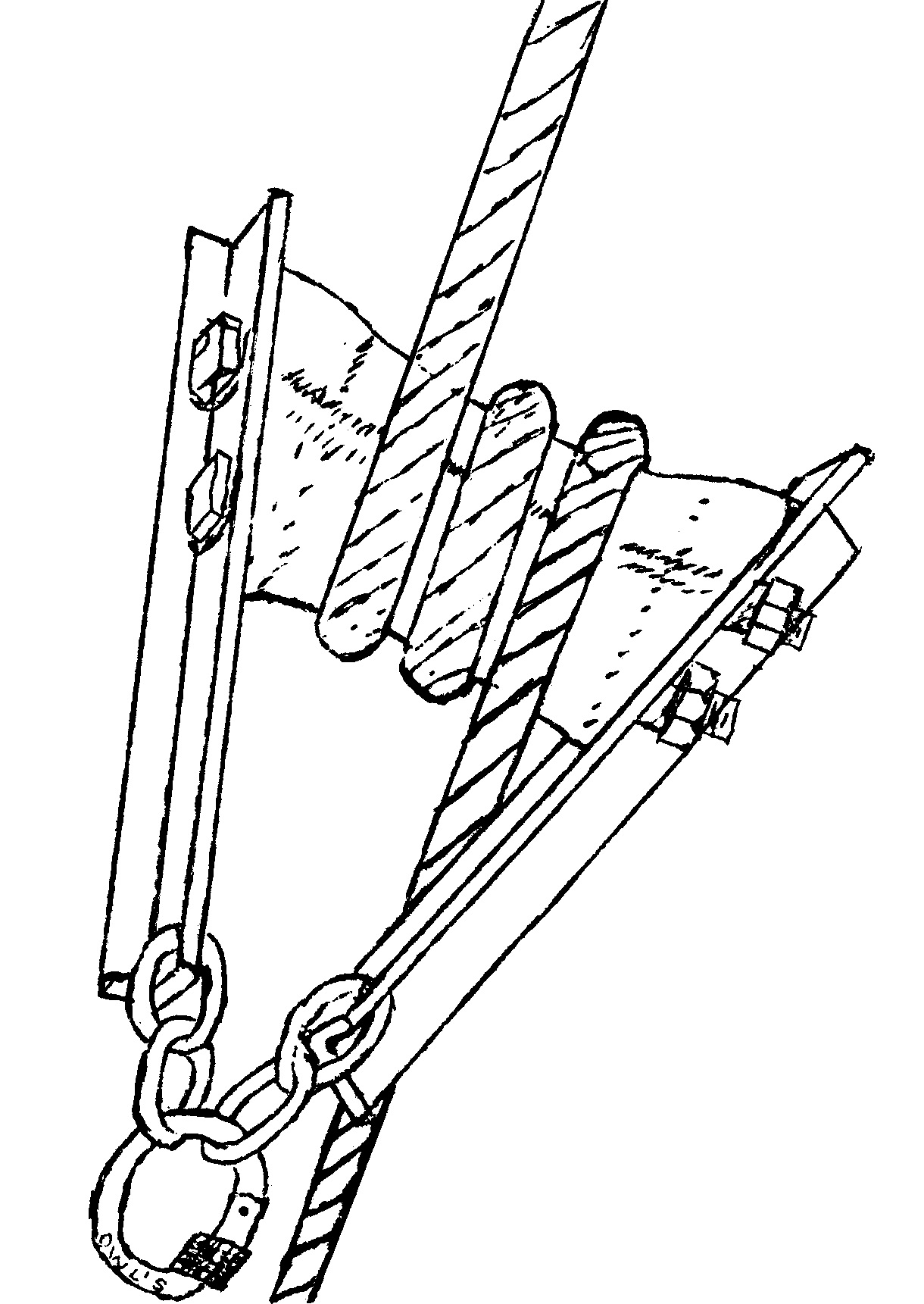
Rappel spool
In order to bypass the discomfort of the hot-seat rappel, it is apparent that substituting a mechanical element for the frictional body part would be an improvement. To this end, one of the rope descending methods originally heralding from Virginia comprised winding a rappel rope around a friction-producing assembly similar to the manner in which a capstan is employed in the nautical world.
This drawing illustrates a wooden core…mounted horizontally…with the rappel rope wrapped several times along its extent. The friction between the wooden core and the rope helps to moderate the descent speed of the rappeller.
Because of the characteristic shape of the requisite core, such a device is often referred to as a rappel “spool.”
[Illustration from the Cover of the October 1959 Cavalier Caver.]
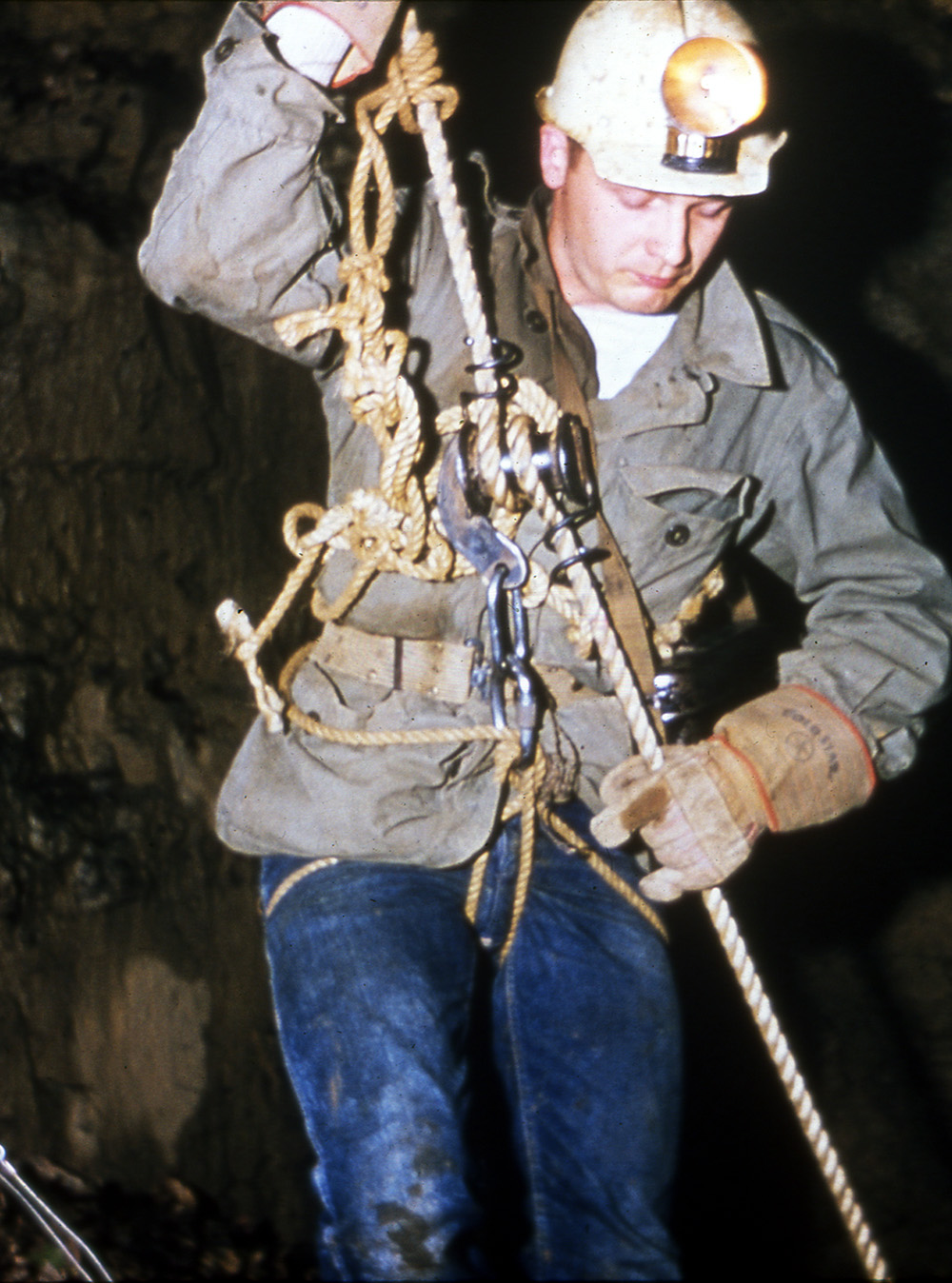
Metal rappel spool
Refinements to the rappel spool include replacing the wood with an appropriate metal. This photo shows Roy Davis about to begin a descent of Mystery Hole, Tennessee using a metal rappel spool. Although more elegant than the wooden version, it is apparent that the spool is a big and cumbersome piece of equipment.
[Photograph by Leonard and Barbara Munson.]
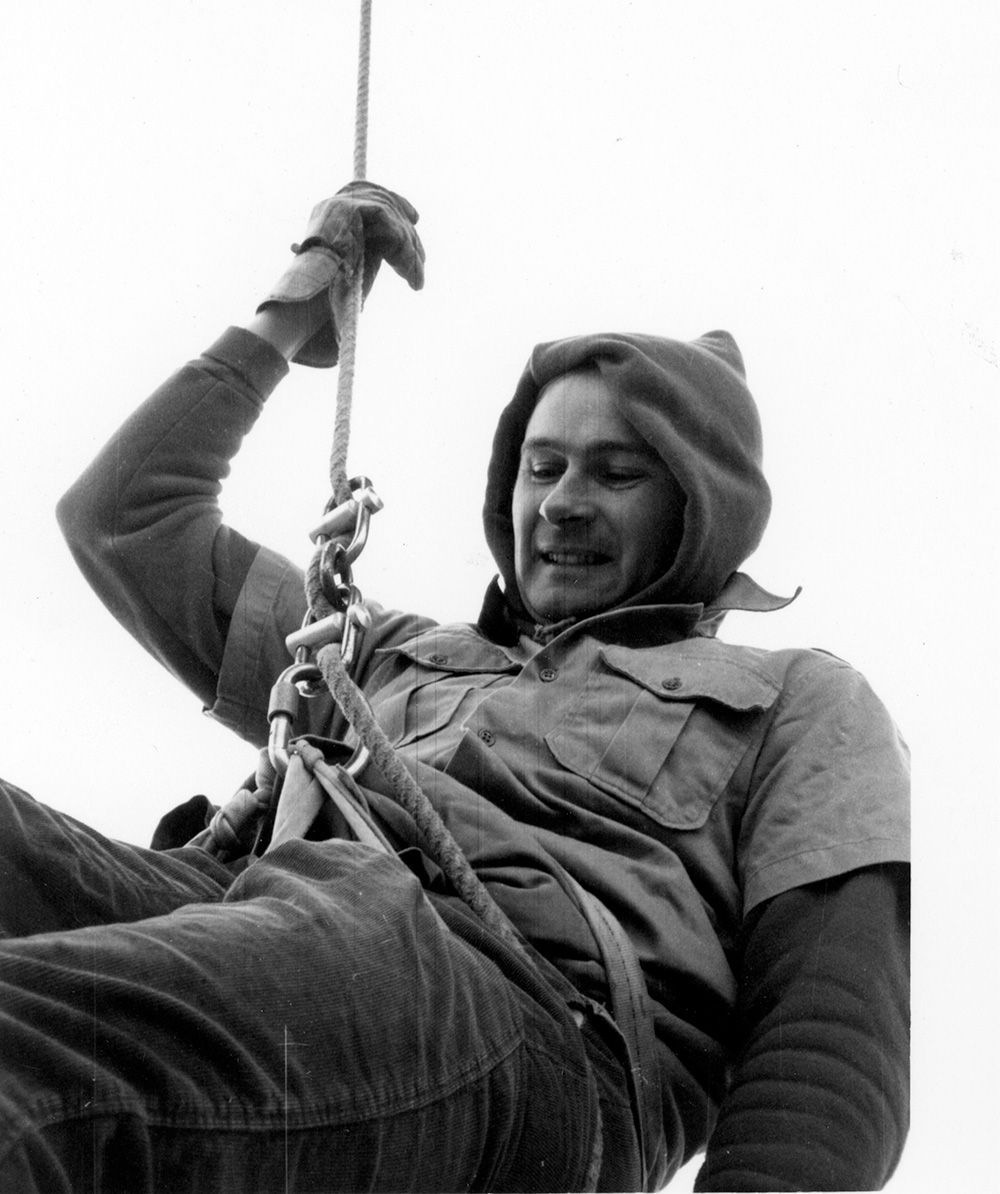
Carabiner/brake bar rappel
In an effort to mitigate some of the undesirable features of the rappel spool, certain cavers turned to a rappel rig using an arrangement of carabiners and brake bars hooked in tandem via a metal chain link. Bill Cuddington demonstrates a “double brake bar‒carabiner” rappel at an outdoors practice session.
[Photograph by Dick Mitchell.]
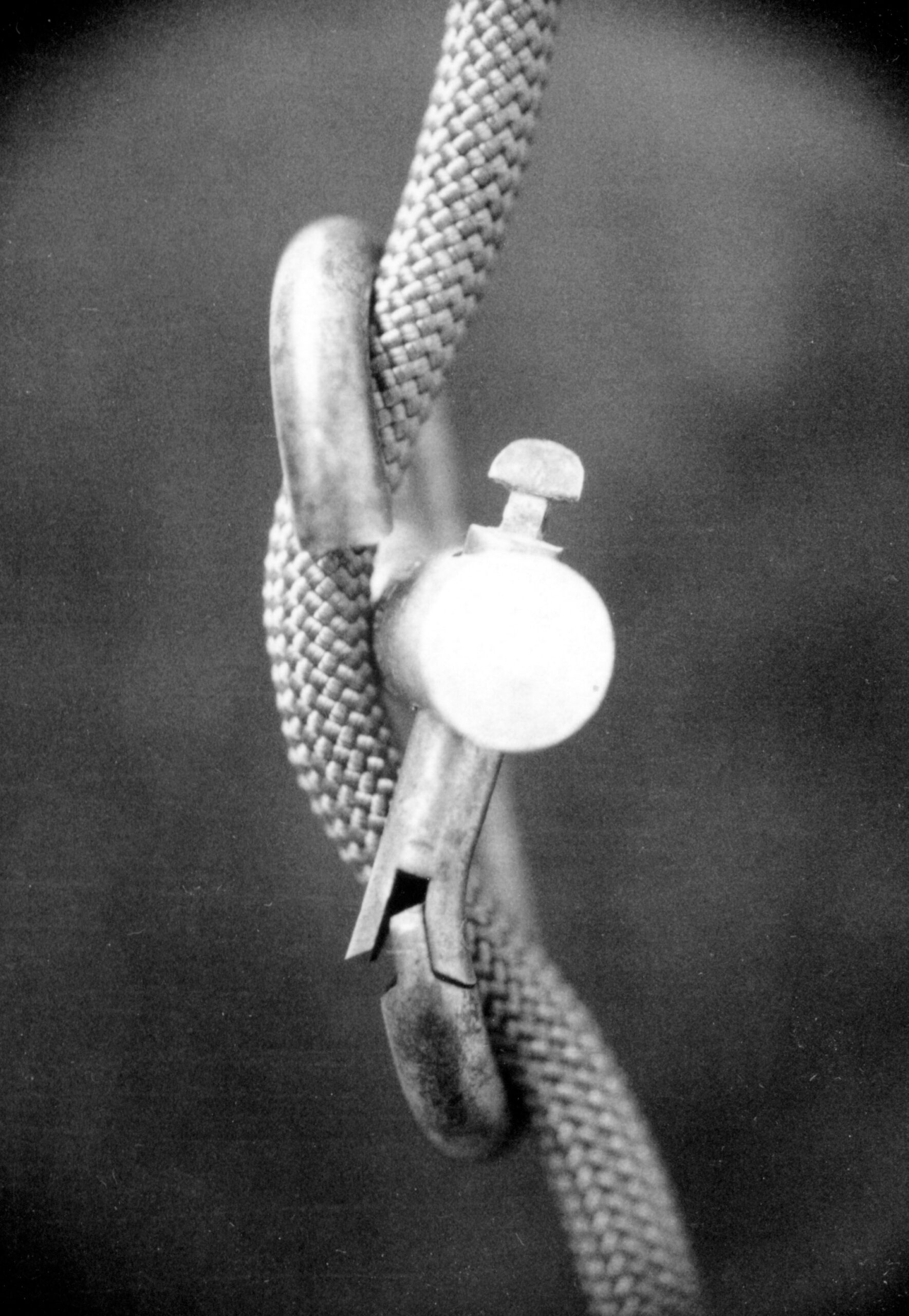
Carabiner/brake bar with broken gate
One serious problem with the brake bar-carabiner geometry is that the brake bar loads the carabiner across its weaker, minor axis. As a consequence, the carabiner gate can be undesirably bent or broken…potentially resulting in a catastrophic accident.
[Photograph by Roger Bartholomew.]
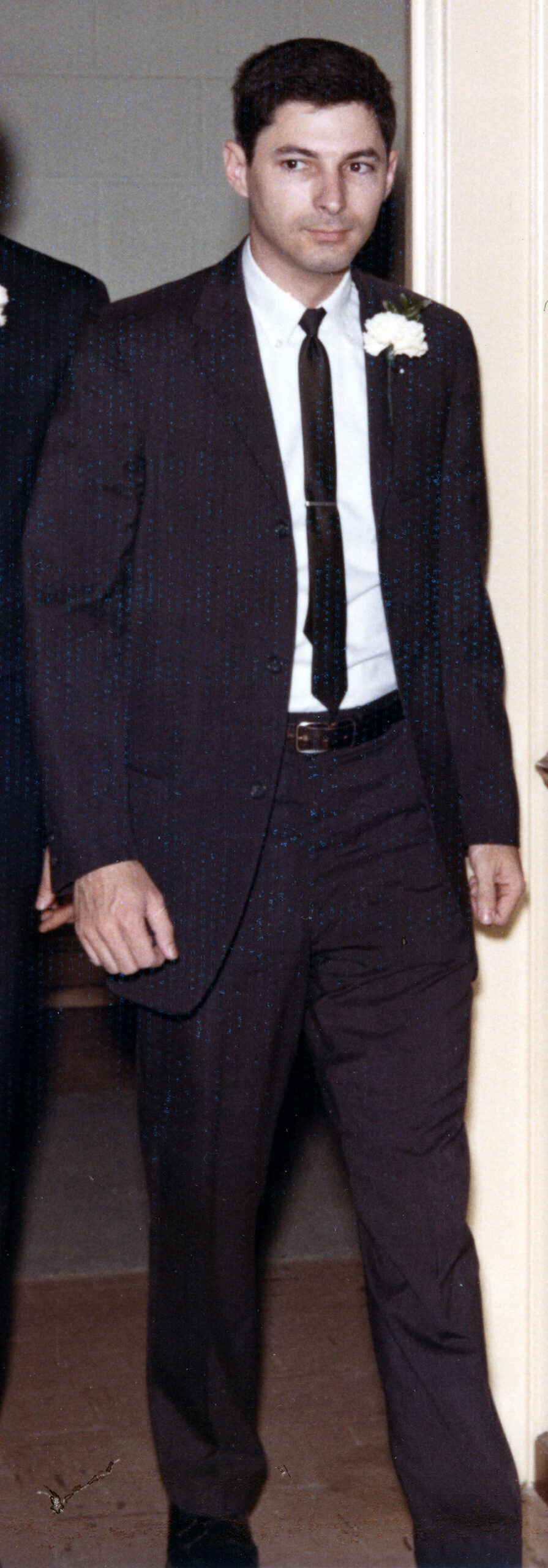
John Cole
Rappel spools and double brake bar‒carabiner rigs were state of the art for vertical caving in 1962. In that year, a young man named John Cole graduated from Auburn University and moved to Huntsville, Alabama to begin a career with America’s burgeoning space program.
Before long, John was introduced to caving. He became friends with Bill Cuddington, John Patten, Ben Kavanaugh, and other vertical caving luminaries.
[Photograph courtesy of Bill Cuddington.]
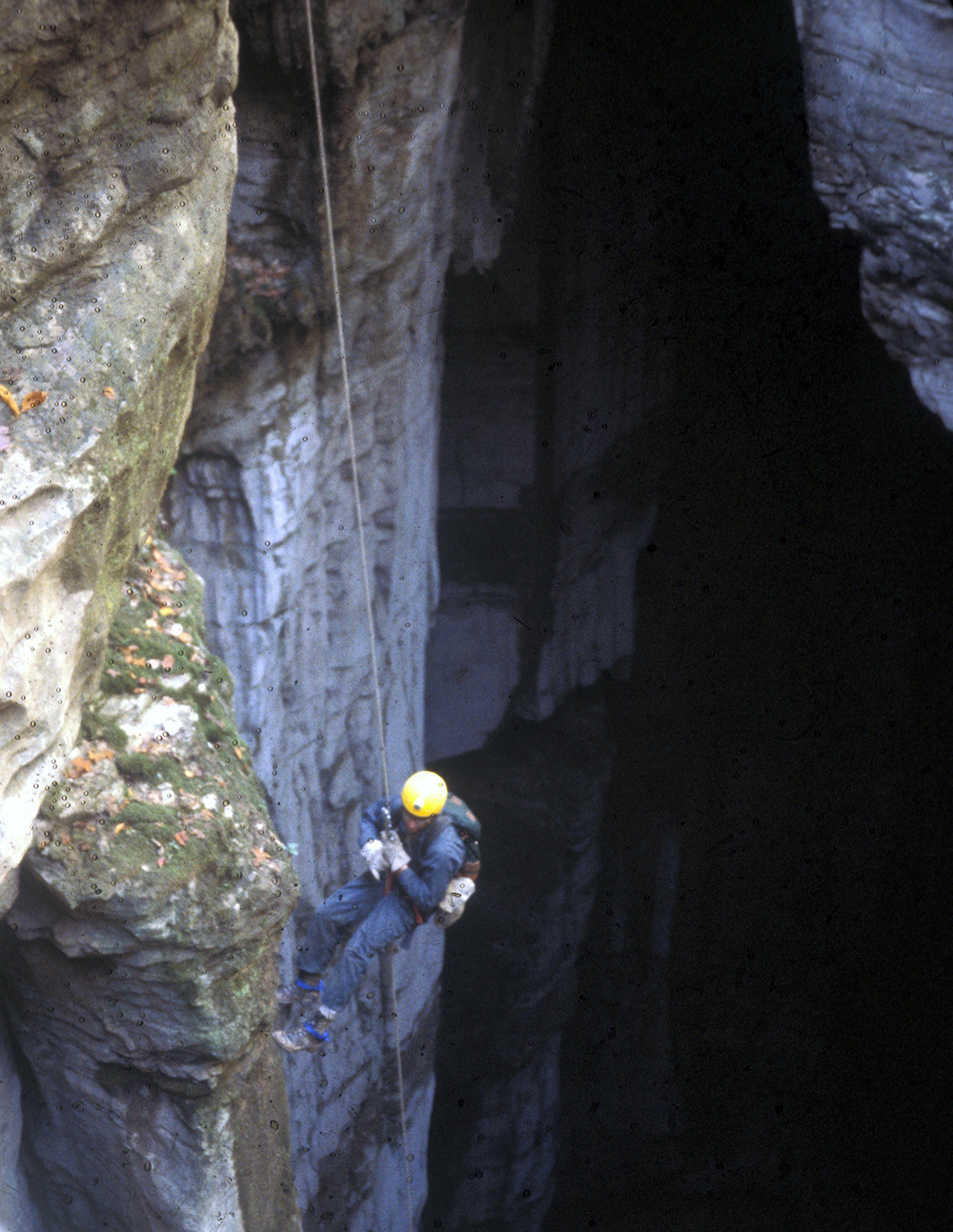
Valhalla
In addition to his exemplary “day job” work with NASA, John Cole did a lot of pioneering vertical caving. For instance, John was involved in the first exploration of the classic Alabama pit named Valhalla.
[Photograph by Jack Chislett.]

Golondrinas
John Cole was also a member of the team that accomplished the initial descents of 1,094-foot Golondrinas during April of 1967.
[Photograph by Dave Bunnell.]
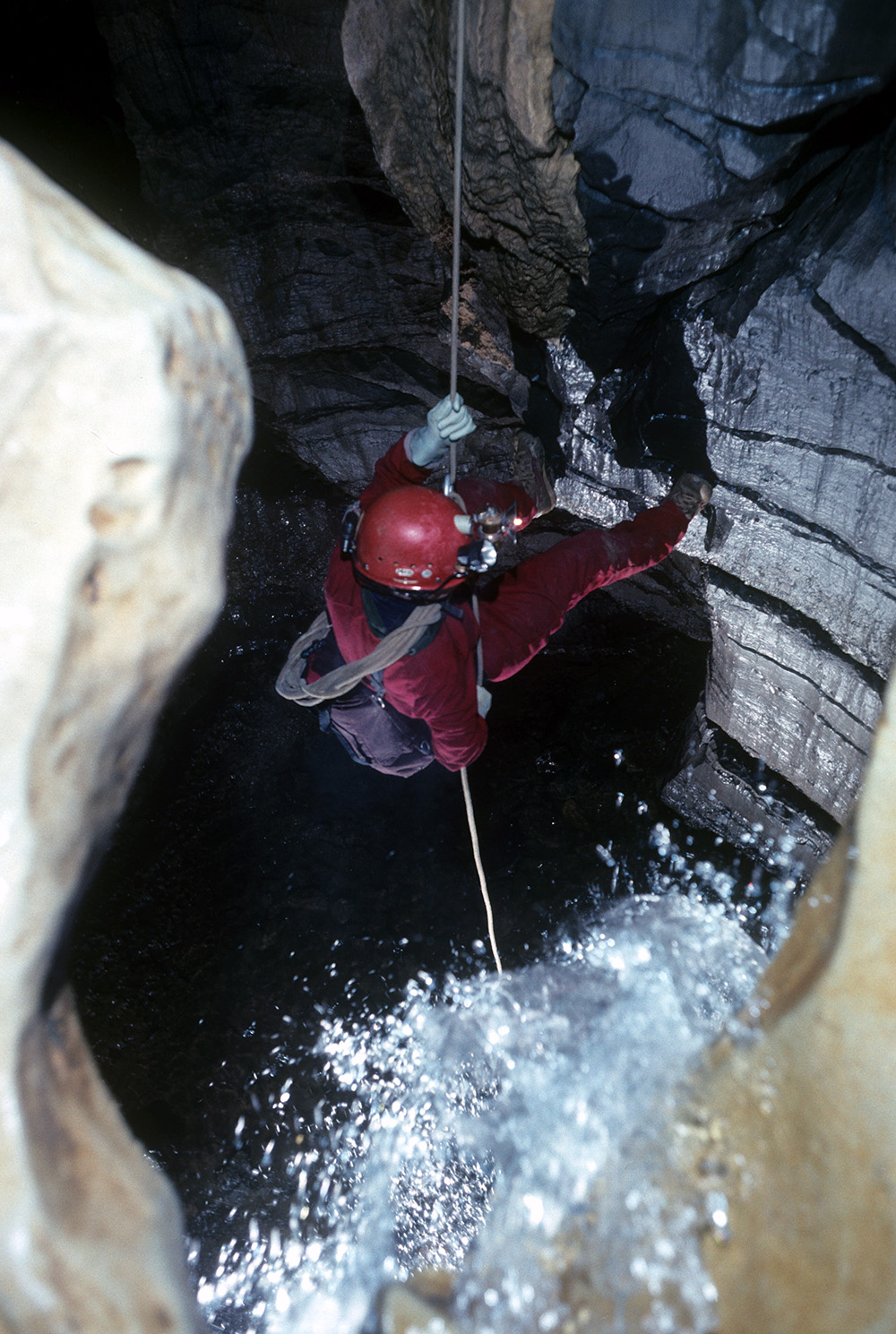
Friars Hole Cave rappel
John Cole and his vertical caving friends experienced and subsequently analyzed the limitations of existing rappel devices. He recognized that any improved device should enjoy several important features:
*It should permit the rappeller to adjust the amount of friction during the descent.
*It should be easy to fabricate in a modest workshop.
*It should be relatively inexpensive.
[Photograph by Ron Simmons.]
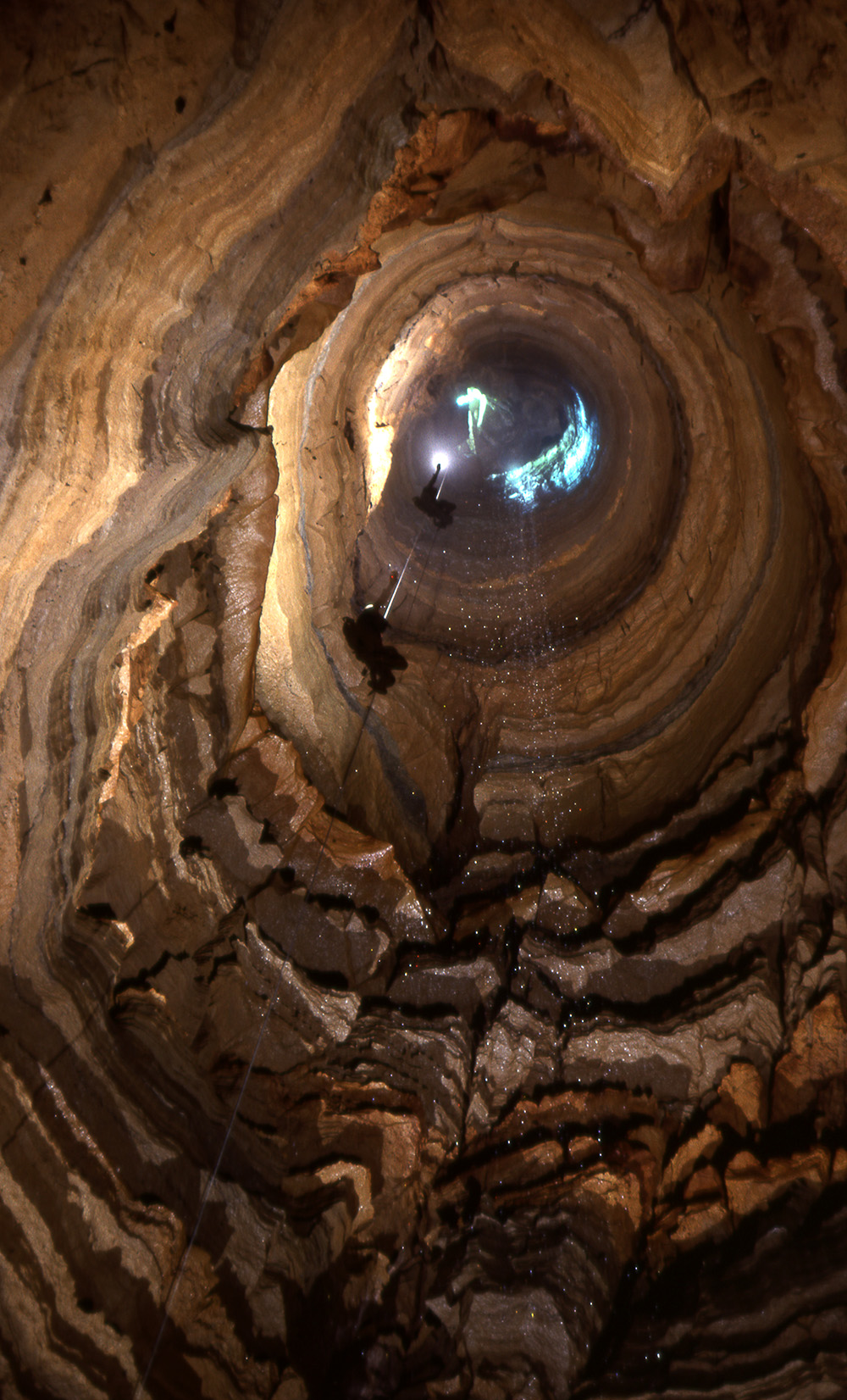
Green's Well
John Cole had a brainstorm. Why not, he reasoned, employ commercially available components in a new and improved way? In particular, Cole proposed fabricating a simple metallic frame and populating it with standard brake bars. Such an item would be simple to make. And, clipping in and out various numbers of brake bars while on rappel should afford an easy way to provide variable friction.
[Photograph by John Van Swearingen, IV.]
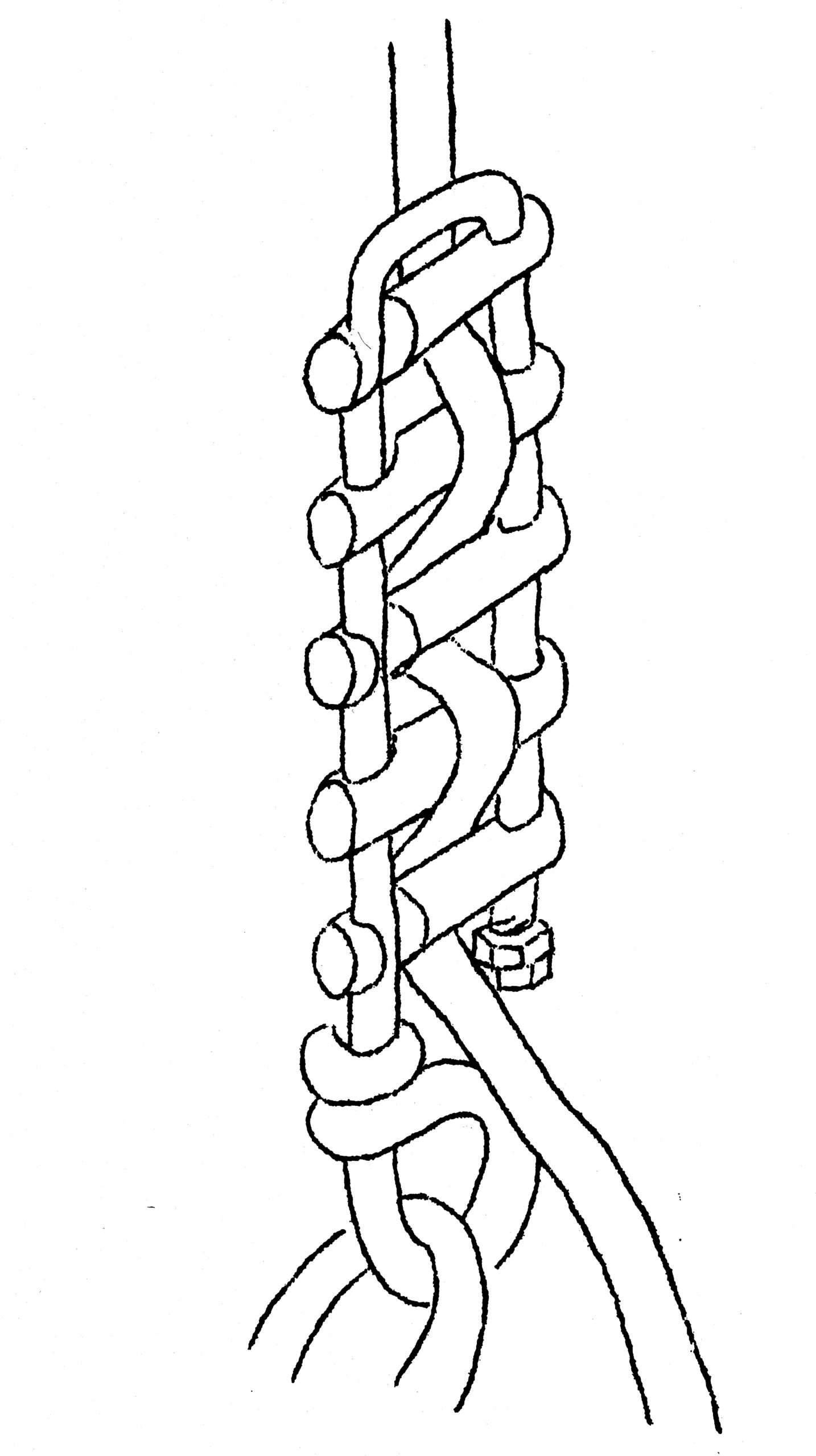
Rappel rack
John’s familiarity with the double brake bar‒carabiner arrangement suggested that five brake bars…vertically spaced out along the frame…would provide a similar number of rope bends as the double brake bar rig.
[Illustration from Page 49 of the February 1967 Huntsville Grotto Newsletter.]
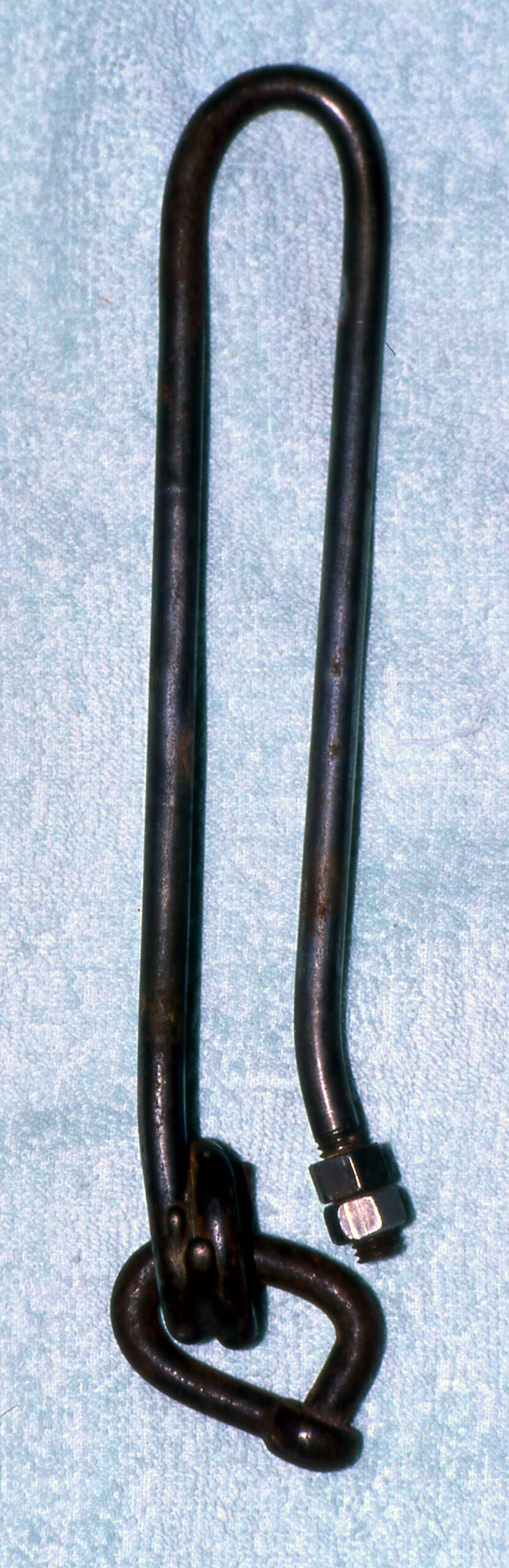
Second rappel rack made
Cole obtained some steel bar stock from Hopper Hardware in Huntsville. Firing up a backyard barbeque grill was next on the agenda. Then, a vacuum cleaner rigged up backwards…to blow air…converted the grill into a crude, but workable, forge.
Using a vise and a pair of pliers, the heated steel rod was bent into an inverted U-shape wide enough to accommodate standard brake bars. One end of the rod was threaded for a machine nut. The other end was wrapped into a simple loop in order to provide a carabiner attachment point.
[Photograph by Dave Hughes.]
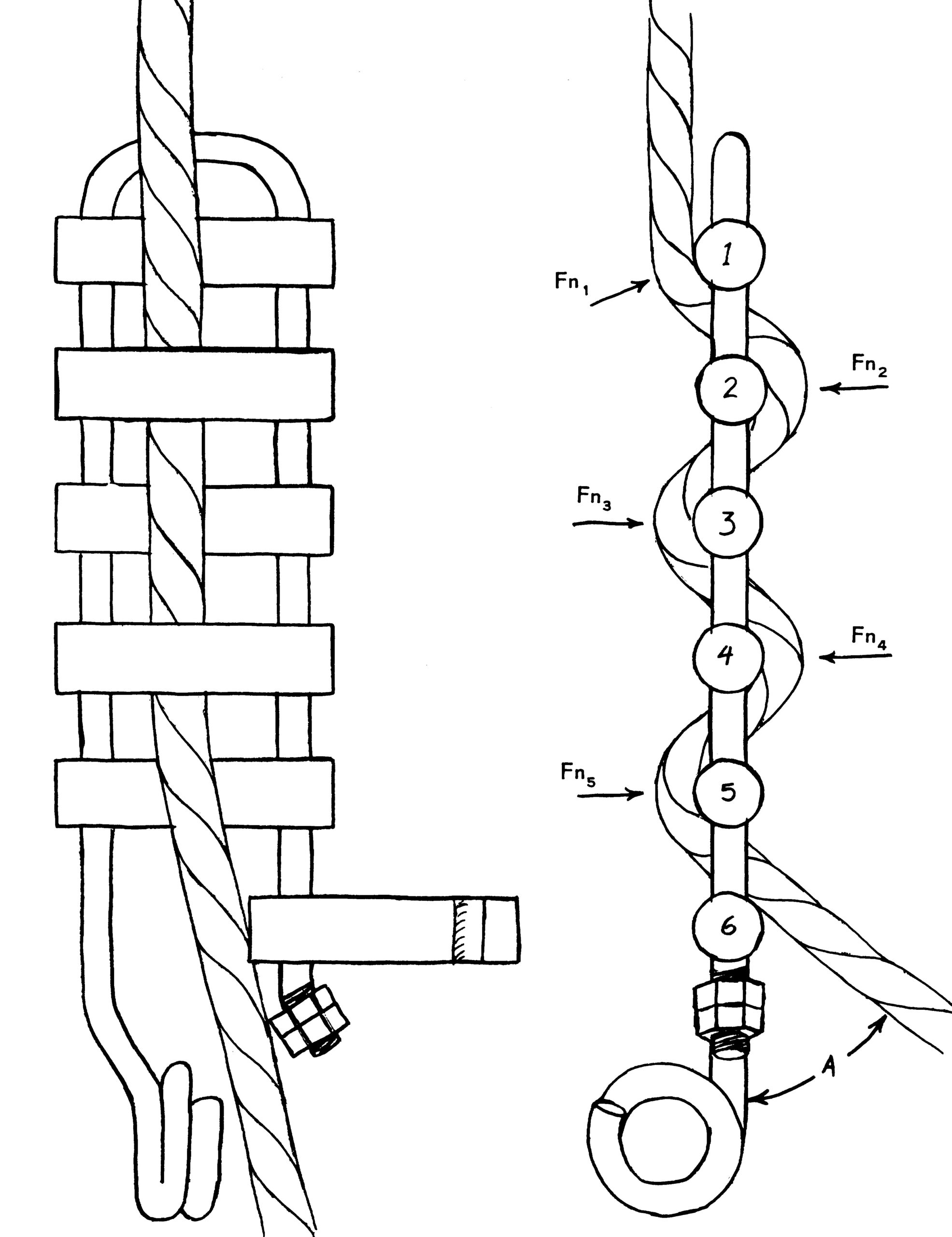
Six bar rappel rack
After John demonstrated his rappel rack to Bill Cuddington, Bill requested that John modify the design to accommodate an additional brake bar and thus provide “fingertip control” in “super-deep pits.” As a result, the six-bar version became standard issue for the John Cole rappel rack.
[Illustration from Page 155 of the June 1966 NSS News.]
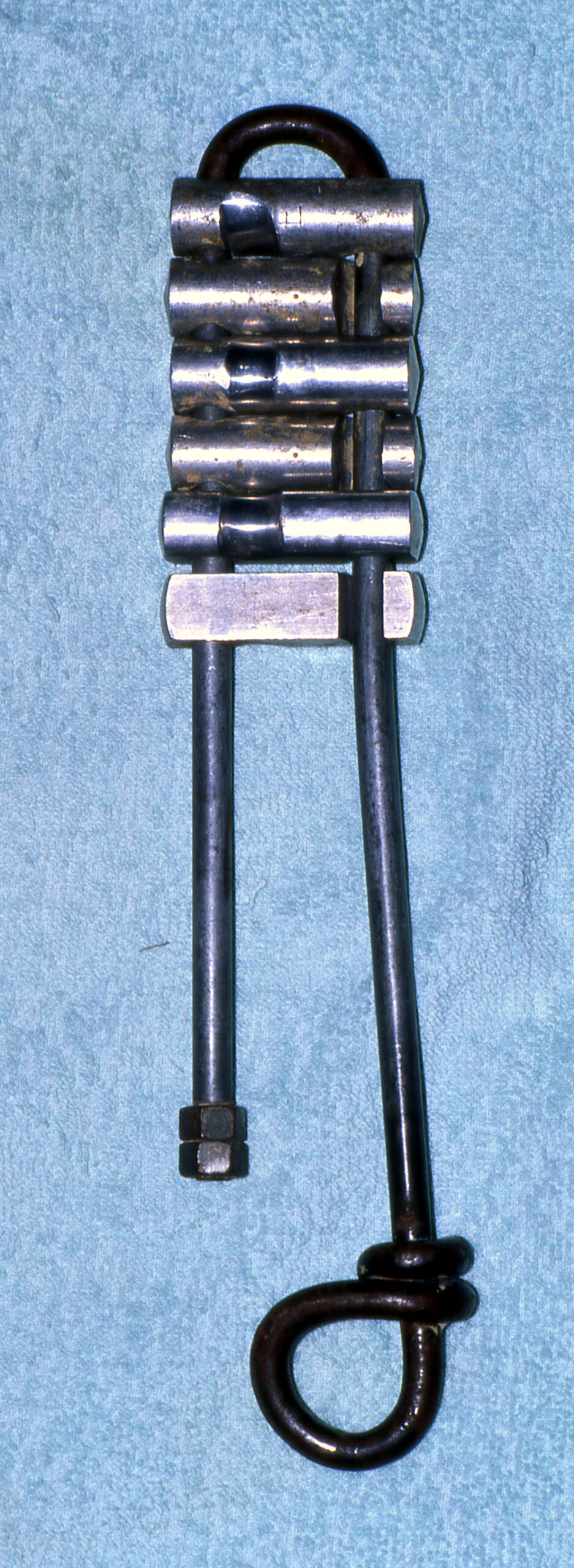
First six-bar rappel rack
This is the first six-bar rappel rack that John Cole made at the request of Bill Cuddington. The rack frame shown in this picture is original, although the brake bars seen here may have been replaced from time to time.
[Photograph by Dave Hughes.] [From the NSS Museum collection.]
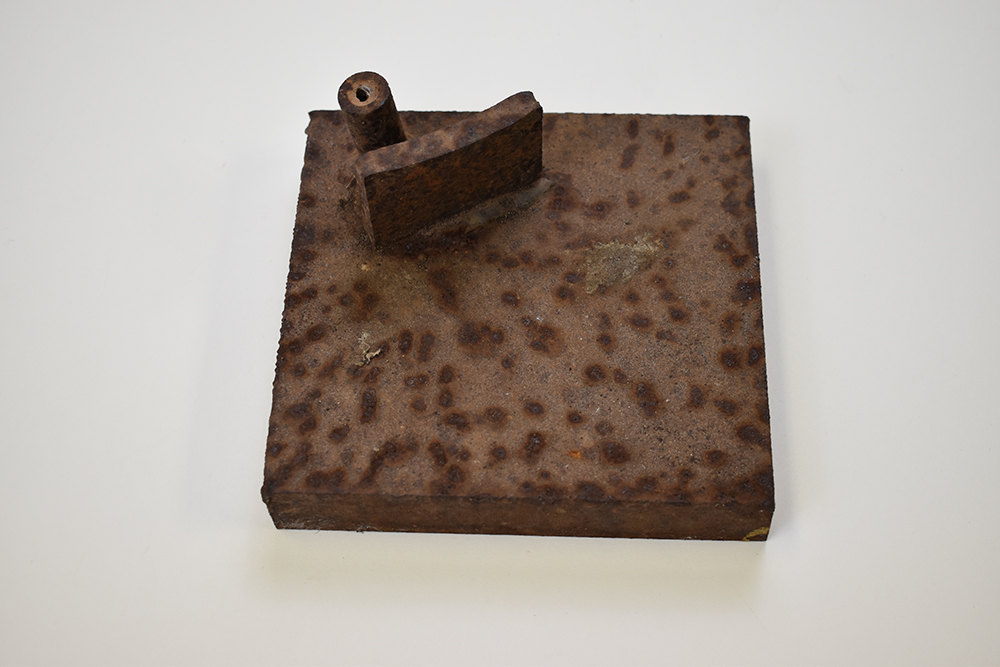
Rappel rack bending jig
Working out of his own residence, in his spare time from his “real” job, and losing money all the while, John Cole blacksmithed out about 500 handmade rappel racks. In the course of doing so, John built and employed this simple jig to facilitate bending the requisite U-shape at the top of the rack.
[Photograph by NSS Archivist Ed Strausser.] [From the NSS Museum collection.]
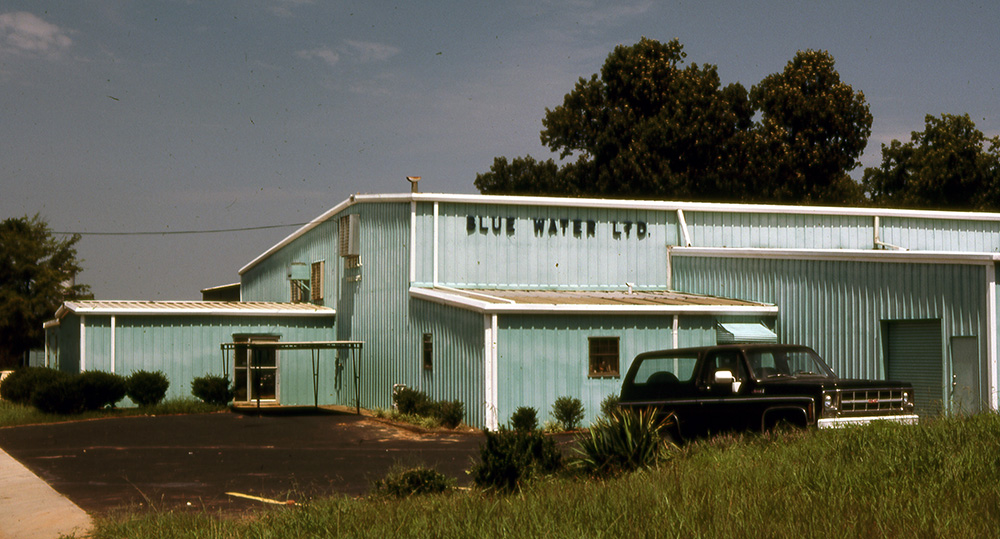
Blue Water Ltd. factory
Overwhelmed with the demand, John Cole eventually elected to turn over manufacturing of the rappel rack to caving equipment supplier Blue Water, Ltd. located in Carrollton, Georgia.
Richard Newell was the president of Blue Water. Richard suggested to Cole that John accept a royalty payment for each rack sold by Blue Water. John Cole declined the royalty. Instead, he asked Newell to simply subtract the proposed royalty amount from the selling price of every rappel rack.
John insisted, “Whatever you’d pay me out of it, just take that off the price and keep them cheap.”
[Photograph by Dave Hughes.]
John Cole
Vertical caving pioneer Bill Cuddington deems the rack “the best all-around rappel device ever invented.” In addition to cave explorers, the rappel rack is extremely popular with high-rise contractors, emergency service workers, and steep-angle rescue personnel.
For many years now, cavers and business associates have chided Cole about his decision to simply give the rappel rack invention away. They argue, “You could have obtained a patent on your invention, or charged royalties, or something. You would be rich.”
John Cole pays them no mind.
[Photograph by Debra Guy.]
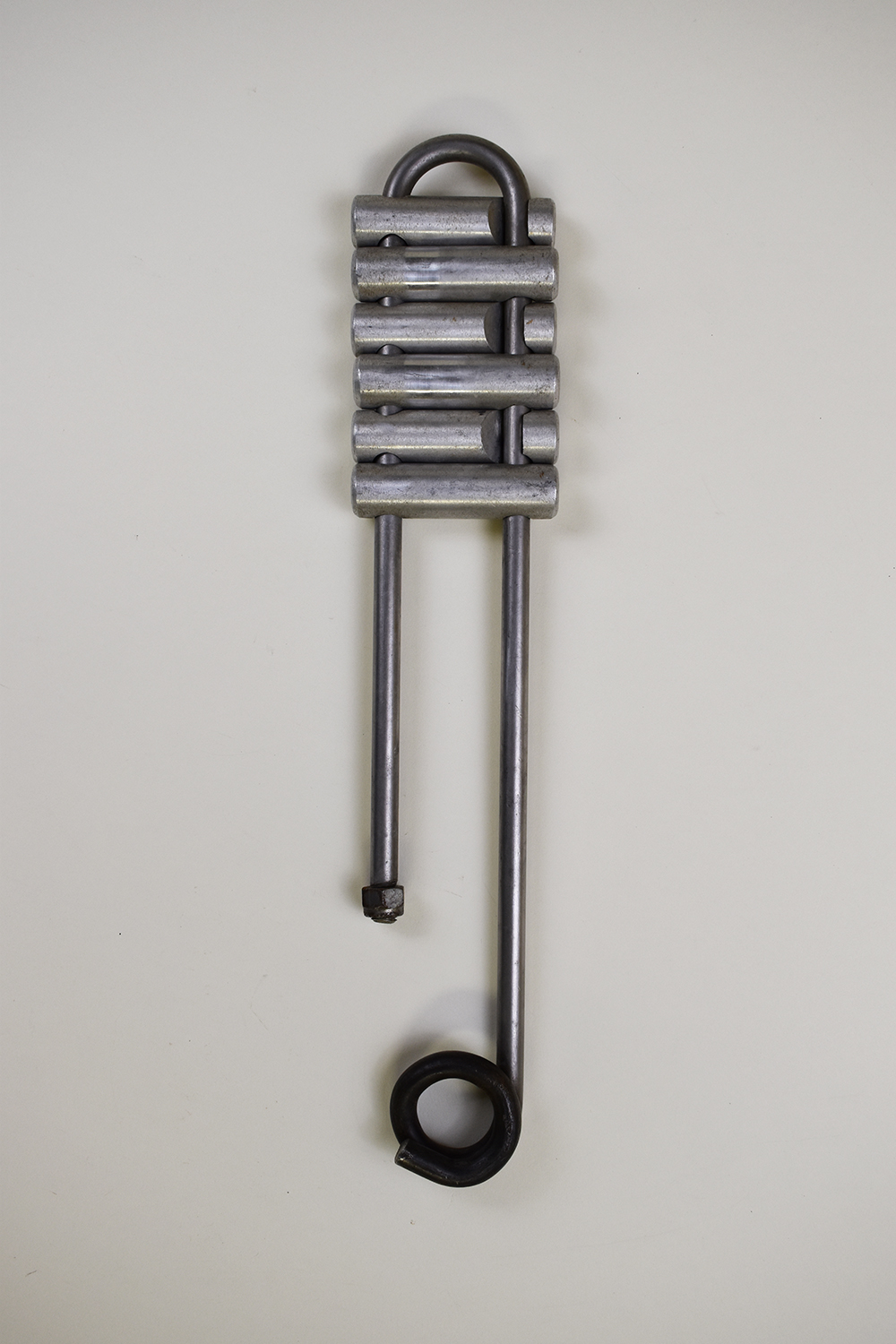
Rappel rack
To Explore Further
John Cole, “New Rappel Device,” NSS News, Volume 24, Number 6, Pages 154-155, June 1966.
John Cole, Bill Cuddington, and John Patten, “Rappel Devices,” The Huntsville Grotto Newsletter, Volume 8, Number 2, Pages 47-52, February 1967.
“You Really Believe in That Thing, Don’t You?” in David W. Hughes, Vertical Bill: The Story of Bill Cuddington and the Development of Vertical Caving in America, National Speleological Society, Huntsville, Alabama, Pages 219-230, 2008.
Dave Hughes and Geary Schindel, “NSS ‘Luminary Series’ Presentations at the 2014 NSS Convention,” NSS News, Volume 72, Number 6, Pages 26-27, June 2014.
John Cole, “Some Memorable Caves, Trips, and Other Things,” Luminary Presentation, 2014 NSS Convention, Huntsville, Alabama, July 15, 2014; available at caves.org/luminary/?_paged=2.
=========================================================
[Photograph by NSS Archivist Ed Strausser.] [From the NSS Museum collection.]
