Tom Culverwell —Climber, Caver, Artist, NSS Member
by Dave Hughes, NSS 14550
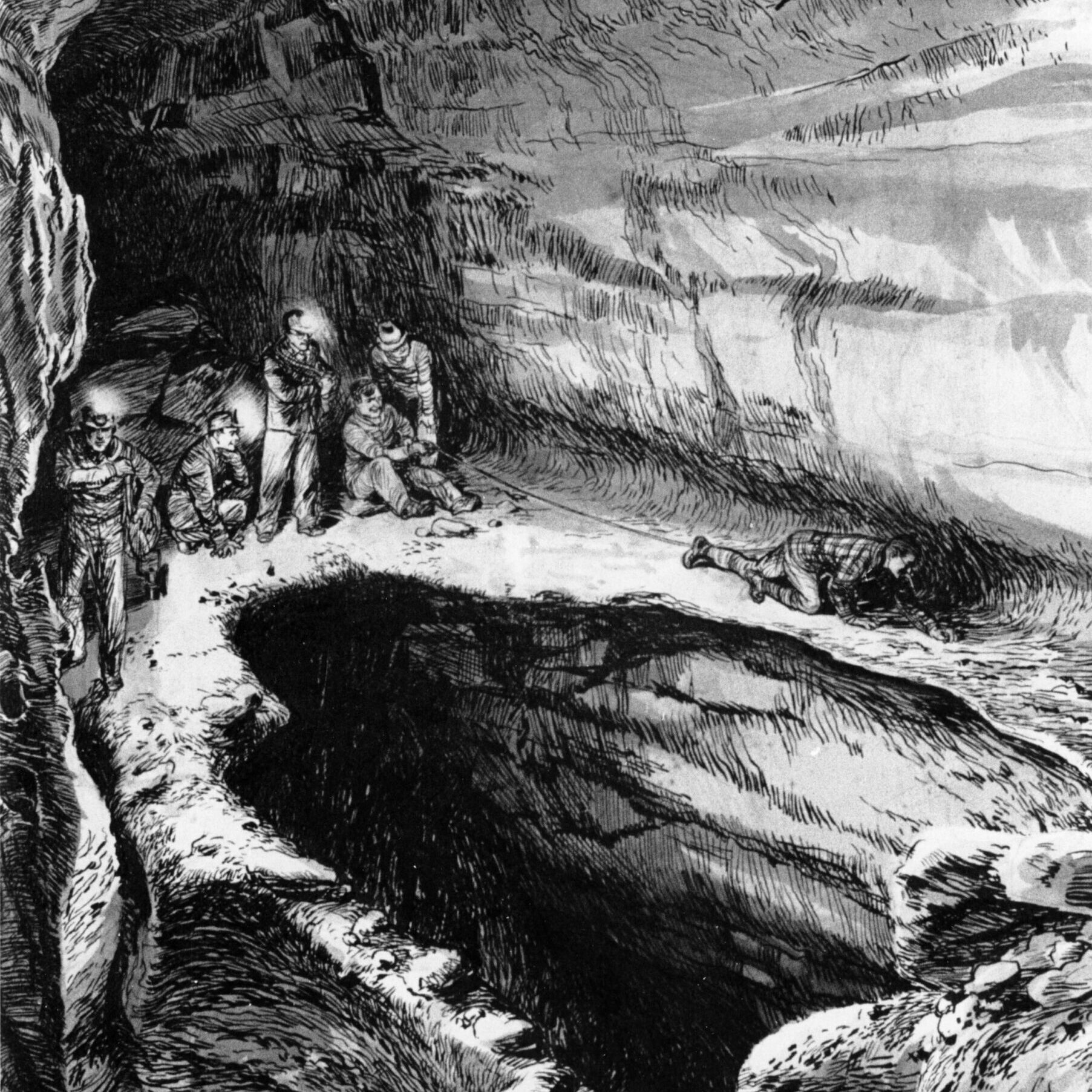
The joyous voices of young school children could once be heard along the Harper Gap Road in picturesque Germany Valley, West Virginia. Surely, some kids would occasionally wander away from the schoolyard to peer at the yawning cave opening a mere hundred yards away. “Schoolhouse Cave” it was called, and there was no more impressive sight in the region.
Early travelers passing through must have shared the children’s excitement when spotting the big cave opening a stone’s throw from the road. A rest stop here would have allowed one to escape the summertime heat while lounging in the cool air surrounding the cave’s entrance.
In earlier times, workers had extracted saltpeter from the cave dirt itself. Then, as was typical of the period, they left equipment and markings behind when the saltpeter mining era was over.
It is nearly certain that all of these earlier visitors—children, travelers, and miners alike—confined their examination of Schoolhouse Cave to only the initial part of the cavern. Whatever lay below the horrifying “Jumping-Off Place” remained a mystery.
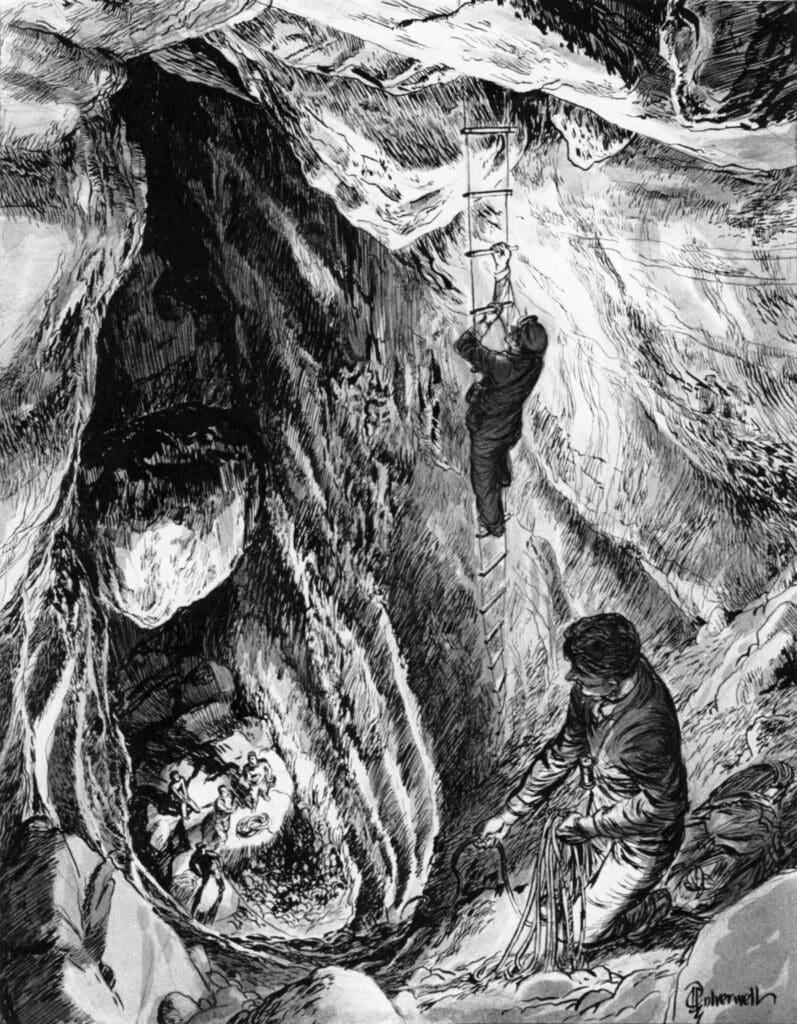
In 1939, intrepid members of the fledgling Speleological Society of the District of Columbia took a stab at penetrating the unknown portions of Schoolhouse Cave. Dangling on a crude ladder below the Jumping-Off Place gave explorer Don Bloch a quick look-see at what lay beyond. Although getting that far was a major achievement in its own right, the perilous descent also convinced Don that penetrating much further into Schoolhouse Cave would require skills far beyond anything that the nascent group currently possessed.
This initial probe was written up in the local newspaper—a daily which enjoyed wide circulation in the Washington, D.C., area. The readership included members of the Potomac Appalachian Trail Club (PATC)—a group of hikers, climbers, and outdoors enthusiasts always on the lookout for a new adventure.
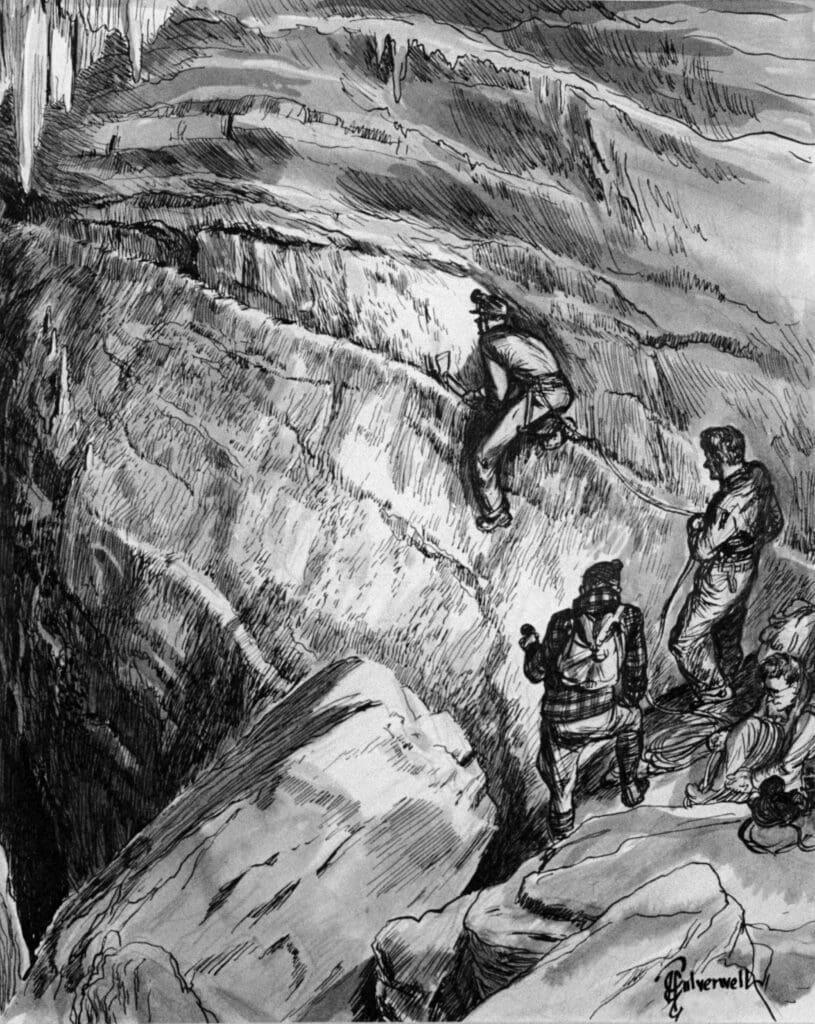
In February of the calendar year after Bloch’s initial reconnaissance, a handful of elite mountaineers from the Potomac Appalachian Trail Club entered Schoolhouse Cave. Initially, they were simply searching for an outdoor gymnasium in which to further hone their rock climbing skills. Preferably, such a practice place would afford some shelter from the outside weather. But, fascinated by what they saw at Schoolhouse, these pioneering explorers immediately recognized the adventure of exploring the cave for its own sake. They returned again and again. For them, Schoolhouse Cave provided all of the excitement of “underground mountaineering.” It was difficult, dangerous, and then some.
Motivated by their adventures, a member of the Potomac Appalachian Trail Club named Tom Speiden Culverwell made a number of detailed sketches illustrating these early explorations. And, as is typical of accomplished rock climbers, Tom and his mountaineering friends created colorful and charming names for the features that they encountered along the way.
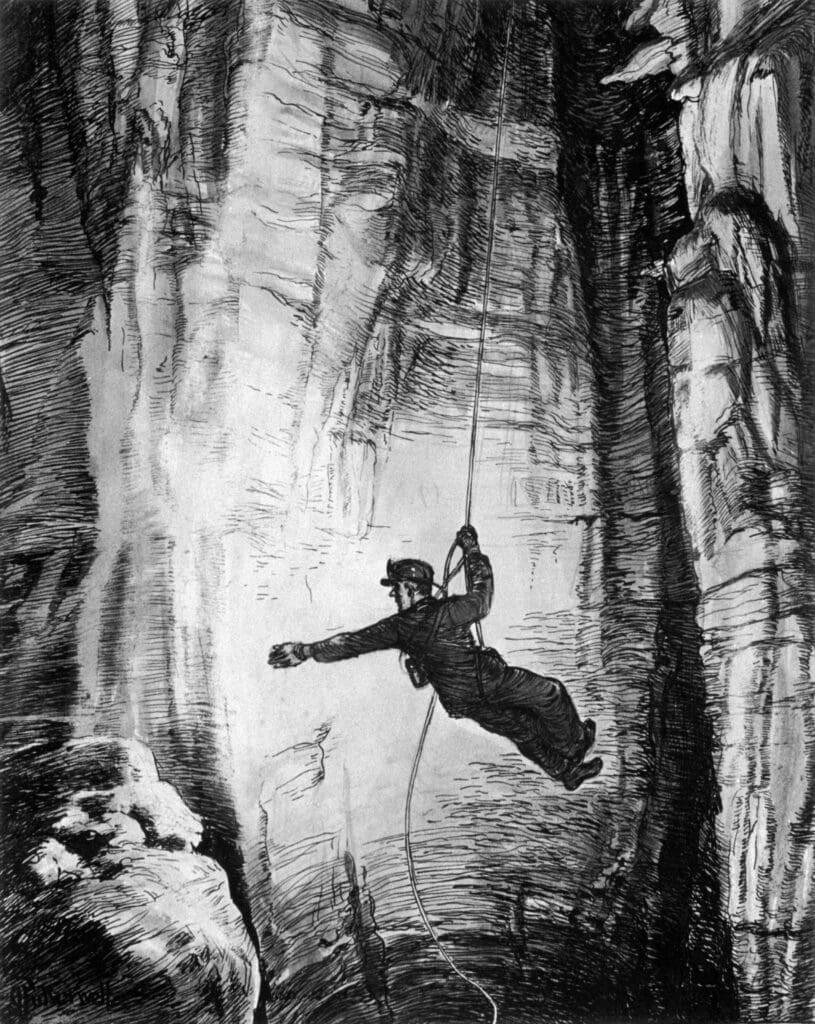
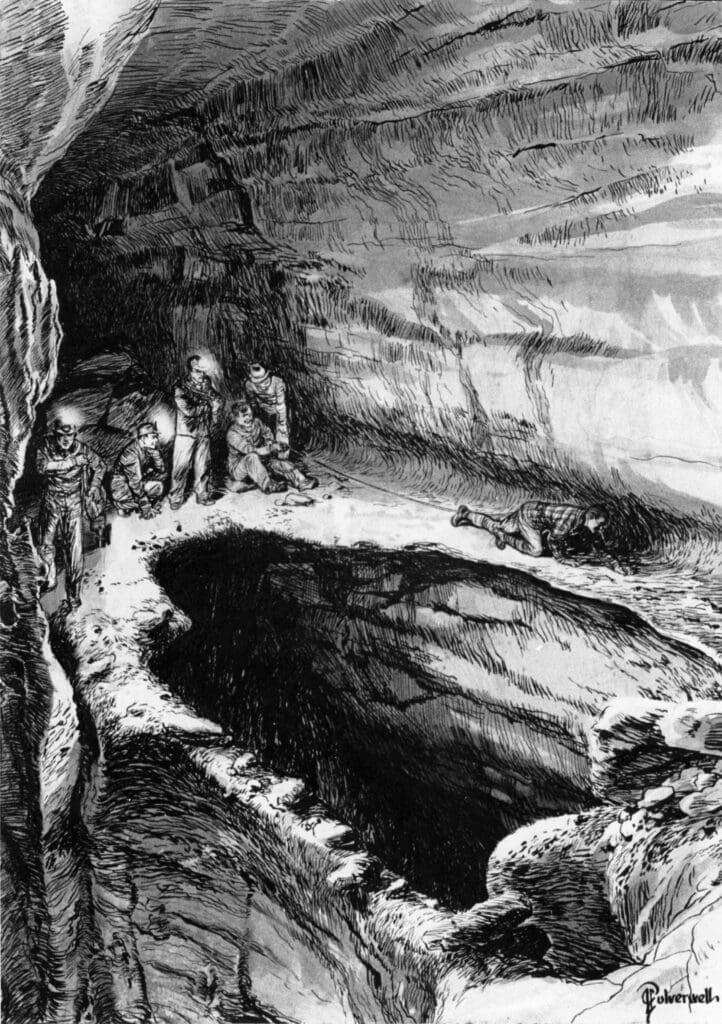
A chance meeting with founding NSS President Bill Stephenson helped to form a long-term relationship between members of the PATC climbing team and the young National Speleological Society. In fact, Tom Culverwell himself was recruited by Stephenson and became National Speleological Society member number 772 on August 27, 1947.
One of Tom Culverwell’s early sketches in a West Virginia cavern that is located across the lane from Schoolhouse Cave ultimately morphed into the emblem of the NSS. In particular, the image included herein shows the cover of what is commonly called “Bulletin Number 2” of the National Speleological Society. On it is illustrated what was chosen—from among several competing alternatives—as the official emblem of the Society. The similarity between Tom’s original design and the current NSS emblem is unmistakable.
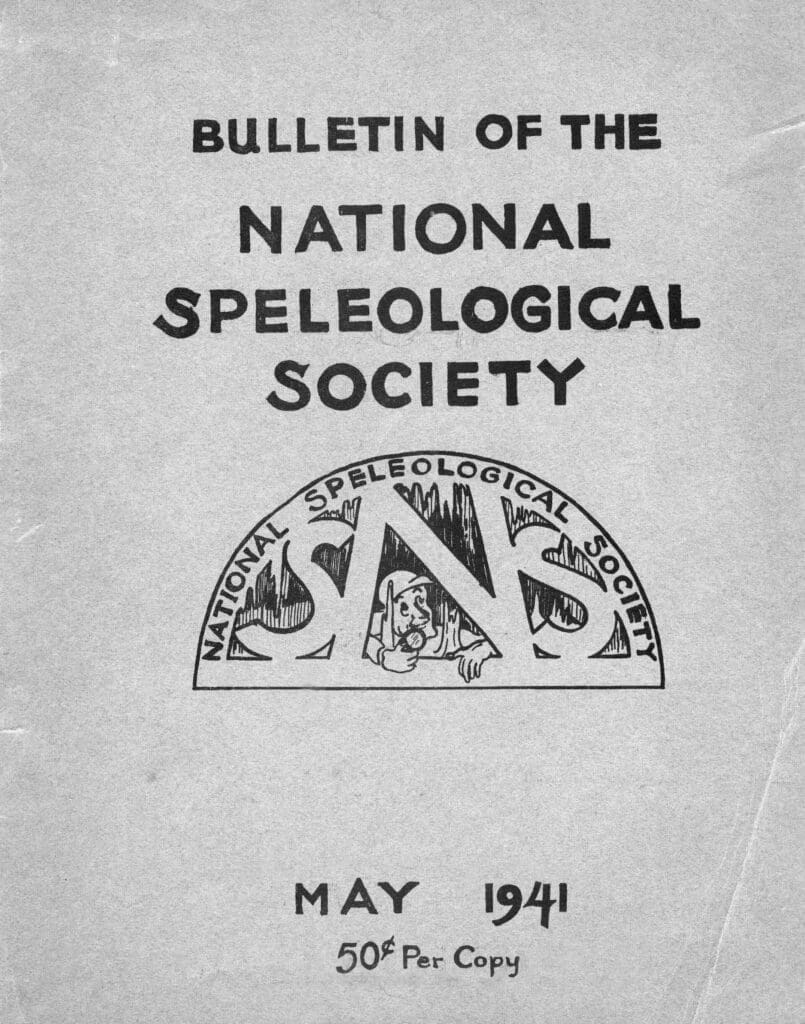
National Speleological Society Emblem, Circa 1941 – Bulletin No. 2
Metrics for selection of the NSS emblem included “simplicity” and “the portrayal of our activities.” To this end, the arc-like shape represents a cave entrance, or an enticing spelean passageway. The interposed initials of the NSS symbolize the Society within a cave. The stalactites and stalagmites adjacent to the initials represent the formations decorating a cave. And, the explorer (in the Culverwell version) typifies an adventurous caver pursuing the fascinating underground world of speleology.
Schoolhouse Cave was an early proving ground for the National Speleological Society. Its rugged challenges helped to develop and hone underground exploration techniques, and Tom Culverwell’s drawings served to inform cavers about the wonders that could be experienced.
Indeed, it is certain that Culverwell’s beautiful drawings excite and inspire Schoolhouse Cave aficionados even to the present day. In fact, Tom’s illustrations are so historic and so captivating that some now grace the headquarters of the National Speleological Society.
After three-quarters of a century on this Earth, Tom Culverwell passed away on March 3, 1977. As part of his legacy, he left behind some of the most beloved images in American caving.